I have done some research, and here are my results!
The following questions are re-posted for your convenience.
- How long will be stay on Europa? Five years? Twenty years? Lifetimes? Generations? Answering this question will also include looking into how long it is actually possible for us to stay on Europa.
- What will be the psychological effects on the humans traveling to and staying on Europa? This will require looking into a little on how big the spacecraft will have to be as well as how long it will take to get there.
- How will we use the water likely found under the surface? Will it be potable? Will we need to bring the materials necessary to purify it on board? I will look into the possible qualities of water that Europa will have to offer to answer this one, as well as what the materials required will be, if required.
Here are my answers to the questions above.
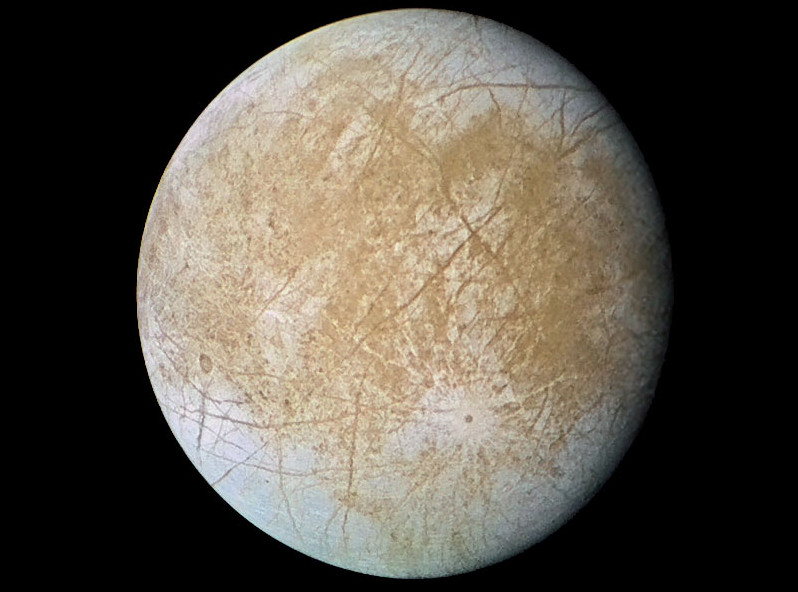
- The purpose of my research project is to discover how we will colonize Europa, so the timescale is intended to be long-term, preferably for generations. So, I looked into how this would be possible and instead of coming to a definite conclusion, as rarely happens in hypothetical situations such as these, I discovered many other questions to be asked. But first, I had to discover how long it would be possible for us to actually stay on the surface of Europa. I found that the answer to that question depended heavily on the structure of the surface. Because the surface of Europa is resting atop of a large ocean underneath the crust, it is highly likely that the surface is unstable and prone to reoccurring shifts, much like the effect on Earth due to plate tectonics.. This means a huge construction could not rest just anywhere on Europa. Where we would be able to build a colony will play a huge factor in the possibility of colonizing the moon, and it also requires further research.
- While researching the psychological effects on the humans traveling to and staying on Europa, I found that the majority of it depends on group dynamics. Whether or not you can handle stressful situations with the people around you in a confined space plays a key role in determining how well you will be able to handle the trip to Europa. This is because the trip length will be large and possibly even over a year long. I found that there is a direct correlation with with mission length and inability to work and stress. There are two different types of stressors that have shown to take effect on space travelers: latent and overt stressors. Latent stressors are stressors that develop slowly over time, are unavoidable, and are difficult to to study and therefore prevent. The main example of a latent stressor is isolation. The effect of isolation can lead to sleep deprivation, depression, irritability, anxiety, impaired cognition, and hostility. This can play a crucial role in impairing the travel to Europa within the crew, as well as the stay on Europa, depending on how big the settlement is. They can also be effected by the size of the craft because of the lack of room there is for each individual person. Overt stressors, on the other hand, are stressors that arise from specific events, such as failure of a task, failure of equipment, or familial issues, that can cause tension. These are easier to detect because of their sudden onset, but near impossible to prevent. The effects of these stressors are similar to those caused by latent stressors and equally as dangerous to the people and the journey.
As I continued my research, I found some solutions that can help lower the chances of these happening, as demonstrated in the following two ways: pre-flight prevention and in-flight fixes. Pre-flight prevention can include screen testing the people for psychological issues, training them to handle their emotions and deal with the stress they might face, planning, encouragement of good relations within the group, autonomy of the crew, and the selection process of the people who get to go. In-flight solutions will include fixing stressful situations and tensions on board through the help of the people back on Earth and the training learned in the pre-flight process. There was interesting study I cam across exploring the difference in tolerability between nationalities. It showed that Italians and Spaniards get irritated more quickly, and that the language barrier between Russia and the United States leads to miscommunication and frustration while in space. - How we plan on using the water was difficult to research. There are not many articles on it, so it was difficult to determine many parts of my question. But from what I gathered from my research, the water will have traces of sulfur in it, so it will require processes of purification. We will have to bring the necessary filtration systems with us on the spacecraft. Because I was unable to determine much about the safety of the water this week, I will continue working on that as I go on.
Thank you for staying updated on my blog! Stay tuned for the next week plan! Until then, I look forward to answering any questions you may have.